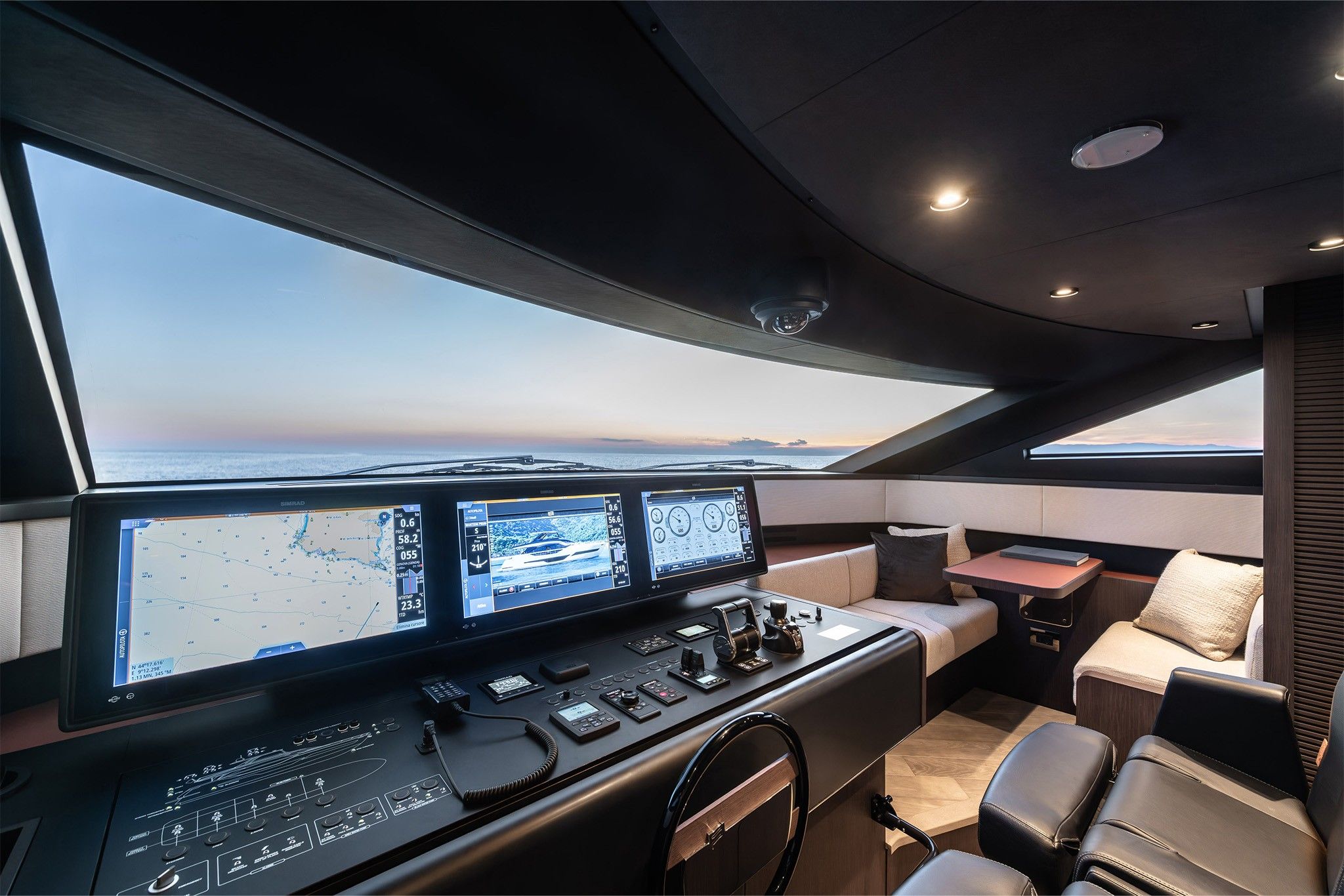
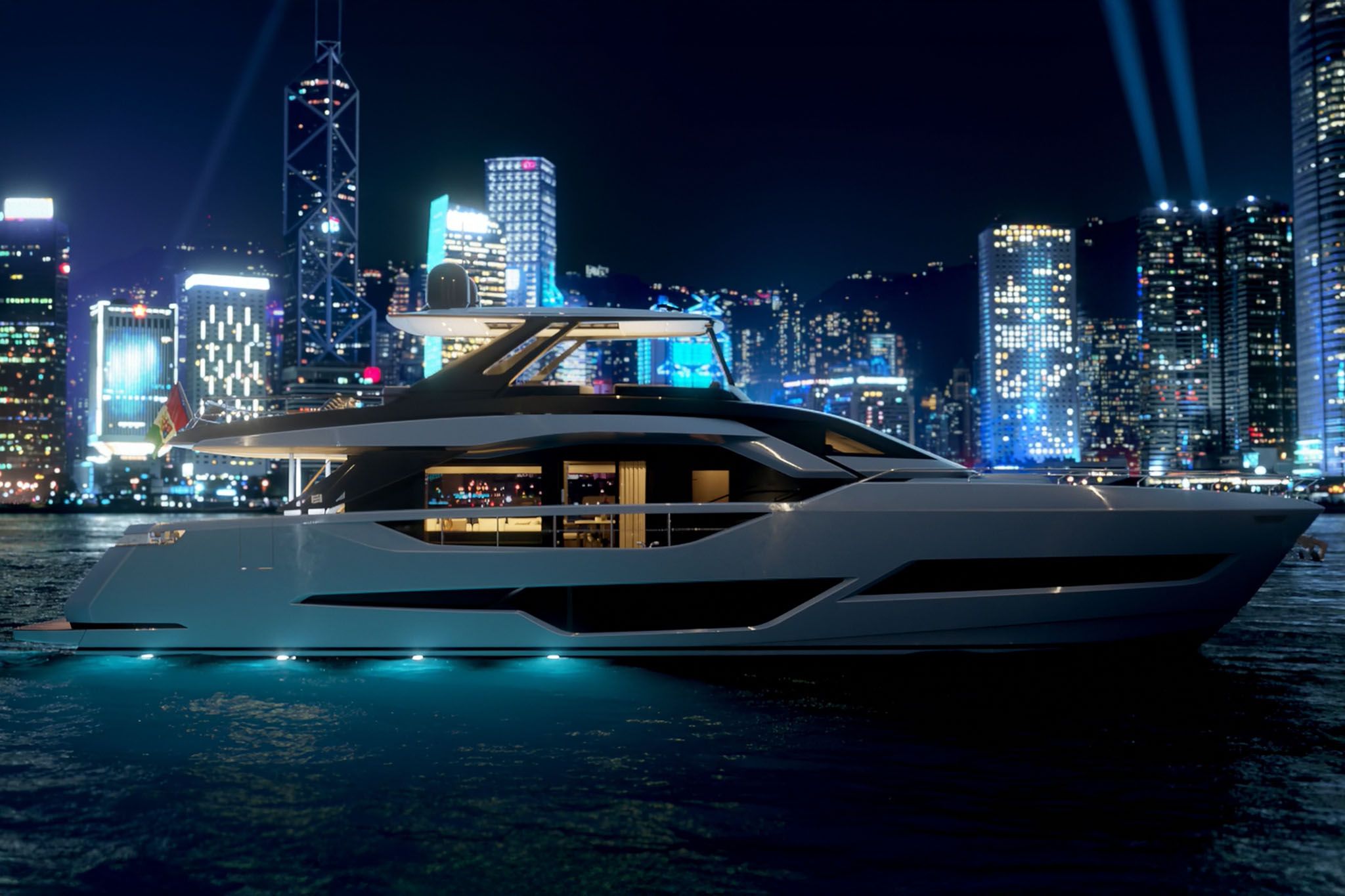
Ferretti builds to prove a point. Almost every model over 50 feet is built and certified to CE Design Category A, the highest class in the European standard, rated “Ocean.” It certifies that the yacht is engineered for extended, self-sufficient ocean voyages, not just coastal runs. Only the largest superyachts sit outside it, above the standard’s 24-metre scope, where equivalent class-society rules apply instead.
The bar is high. A Category A yacht must handle winds beyond Beaufort Force 8, over 40 knots, and significant wave heights above 4 metres, more than 13 feet. That demands a stronger build: thicker laminates and greater hull reinforcement, superior stability that recovers from severe roll, and stricter watertight integrity and drainage to keep water out in heavy seas. Put simply, a Ferretti hull is engineered tougher than boats built to lower coastal categories.
For an owner, the certification is shorthand for trust. It says the yacht under you was designed to keep going, and keep you safe, when the water turns serious.
| Feature | Category A (Ocean) | Category B (Offshore) |
| Primary purpose | Extended, self-contained ocean voyages | Offshore cruising near open coasts |
| Wind speed limits | Exceeds Beaufort Force 8 (over 40 knots / 46 mph) | Up to and including Beaufort Force 8 (40 knots or less) |
| Wave height limits | Exceeds 4.0 metres (over 13 feet) | Up to and including 4.0 metres (13 feet or less) |
| Self-sufficiency | High; designed for long distances without rescue | Moderate; expects a safe harbour within reasonable reach |
Source: EU Recreational Craft Directive (RCD).